
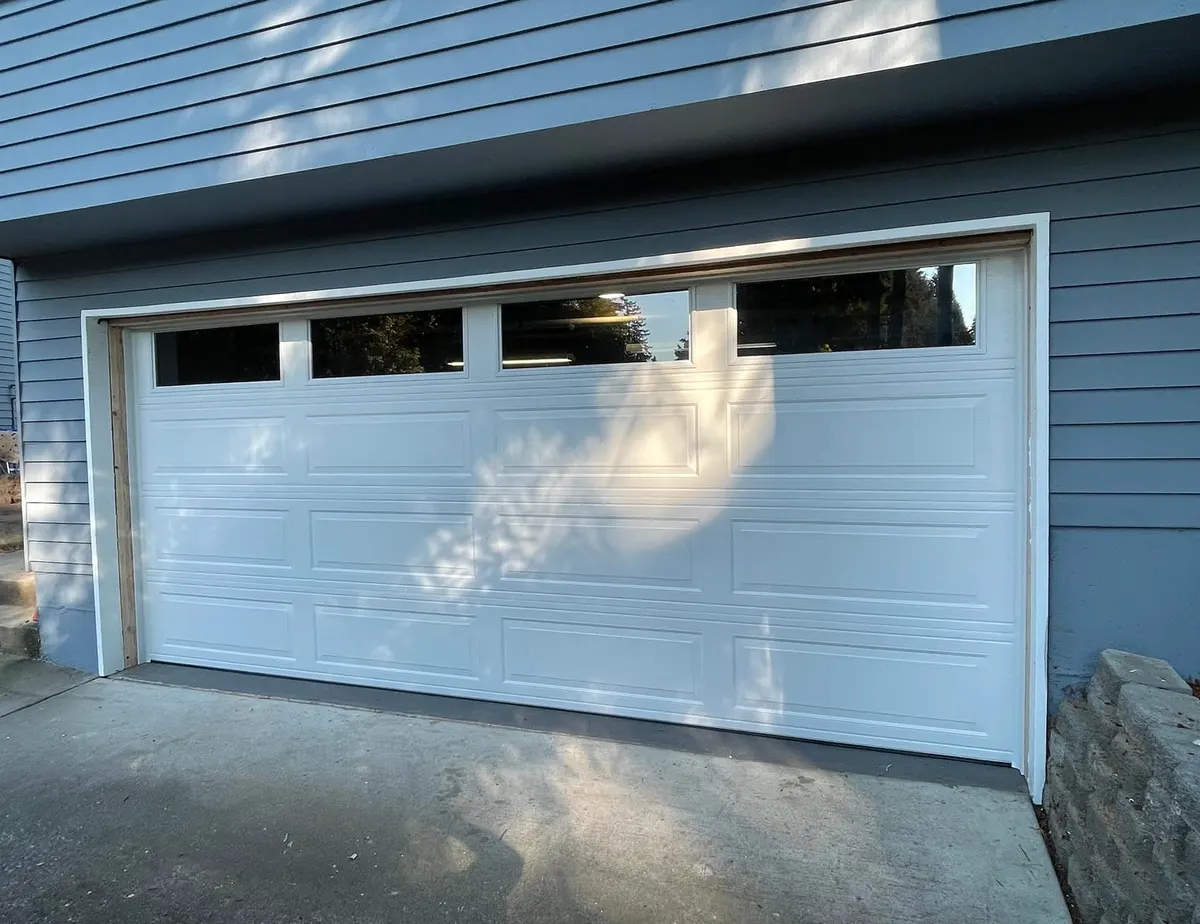
You're standing in the garage of a house you might buy. The agent is upstairs measuring the kitchen. You press the wall button out of habit, and the door lurches up unevenly, one side ahead of the other, with a groan that doesn't sound right. The inspector's report said "garage door operational" and moved on. That one line covers a lot of ground, and it rarely covers the ground that actually costs money later.
Home inspectors check that the door opens, closes, and reverses when something blocks it. That's the minimum. They're not usually pulling panels, checking spring winding, or testing for the kind of wear that shows up six months after you've moved in. Here's what to look at yourself, and what it means if something's off.
Walk the Checklist in the Garage
- Springs: count them, look at the coil, check for gaps. One torsion spring across the top, or two side-by-side? A single spring on a heavier insulated door means it's working harder than it should, and it'll fail sooner. Look for rust pitting or a visible gap between coils when the door is down, that's a spring stretched past where it should be. If it lets go while a car's underneath, you're looking at vehicle damage, not just a repair bill.
- Cables: check for fraying near the bottom bracket. Thin steel cables run from the bottom corners of the door up to the drum near the spring. Frayed strands, even a few, mean the cable is close to snapping. A snapped cable lets one side of the door drop suddenly, which can bend the track or crack a panel.
- Tracks: sight down the length of them from the floor. They should run straight and parallel, with consistent gaps between the track and the rollers. A track that's bowed inward or pulling away from the wall usually means someone backed into the door at some point, or the wall anchors have worked loose. Misaligned tracks cause the shuddering, uneven lift you felt when you pressed the button.
- Rollers: check the material and look for cracks. Plastic rollers crack and chip with age; nylon ones last longer and run quieter. If you see metal rollers with no bearings, expect noise and faster wear. Dust and debris from dry-season winds build up in the roller grooves too, which adds friction and strain on everything else.
- The opener's age and the force setting. Check the manufacture date on the opener's label, not just the install date on a sticker. Openers older than 10 to 15 years often lack modern safety reversal sensors, which matters more than it sounds. Also test the force: hold a 2x4 flat on the ground where the door closes. If the door doesn't reverse on contact, the force is set too high, a safety issue, not just an inconvenience.
- Photo-eye sensors near the floor. These should be mounted a few inches off the ground, aimed at each other, with steady lights. If they're missing, knocked out of alignment, or taped over (a sign someone got tired of false triggers), the door may not stop for a kid or pet crossing underneath.
- Weatherstripping along the bottom and sides. Press a flashlight against the inside of the closed door at night and have someone check from outside for light leaking through. Gaps let in rain during the wet months and dust during the dry ones, and they're a sign the door isn't sealing against the slab the way it should.
- The slab and bottom bracket area. Look for cracking or settling in the concrete right where the tracks bolt to the floor. Older homes across the San Gabriel Valley sometimes show slab movement over the decades, and if the slab has shifted even slightly, the tracks won't sit level no matter how many adjustments you make.
- Bracing on the door panels and header. This one gets skipped constantly. Garage doors are a known weak point in a home's structure during an earthquake, and retrofitted lateral bracing or a reinforced header isn't something you can see from the driveway. Ask whether the door or garage framing has had any seismic retrofit work, and if nobody knows, assume it hasn't.
- Manual release and backup power. Pull the emergency release cord and make sure the door can be lifted by hand without the opener. If the garage has no outlet for a battery backup unit, that's worth noting, a power outage during a winter storm means you're stuck using the manual release until power's back.
Why This List Matters More in Older San Gabriel Valley Homes
A lot of the housing stock in this area predates current hardware standards, which means springs, cables, and bracing may have been replaced piecemeal over the years by different owners with different budgets. One newer panel next to three faded ones is a clue that repairs happened in patches rather than as a full system check. None of that shows up on a standard inspection report, but it shows up on your first repair bill after move-in.
When to Call In a Second Set of Eyes
If you're under contract and want a real answer before closing, El Monte Garage Door Experts can do a full inspection separate from the home inspector's walkthrough, checking spring tension, track alignment, cable condition, and opener safety features in one visit. If something's already failing, they'll walk you through whether it's a straightforward garage door repair or worth negotiating as part of the sale, and handle spring replacement or opener work if it can't wait until after you move in.
Buying a home in El Monte, South El Monte, or anywhere nearby in the San Gabriel Valley? Call El Monte Garage Door Experts before you close, and know exactly what you're getting with the garage.