
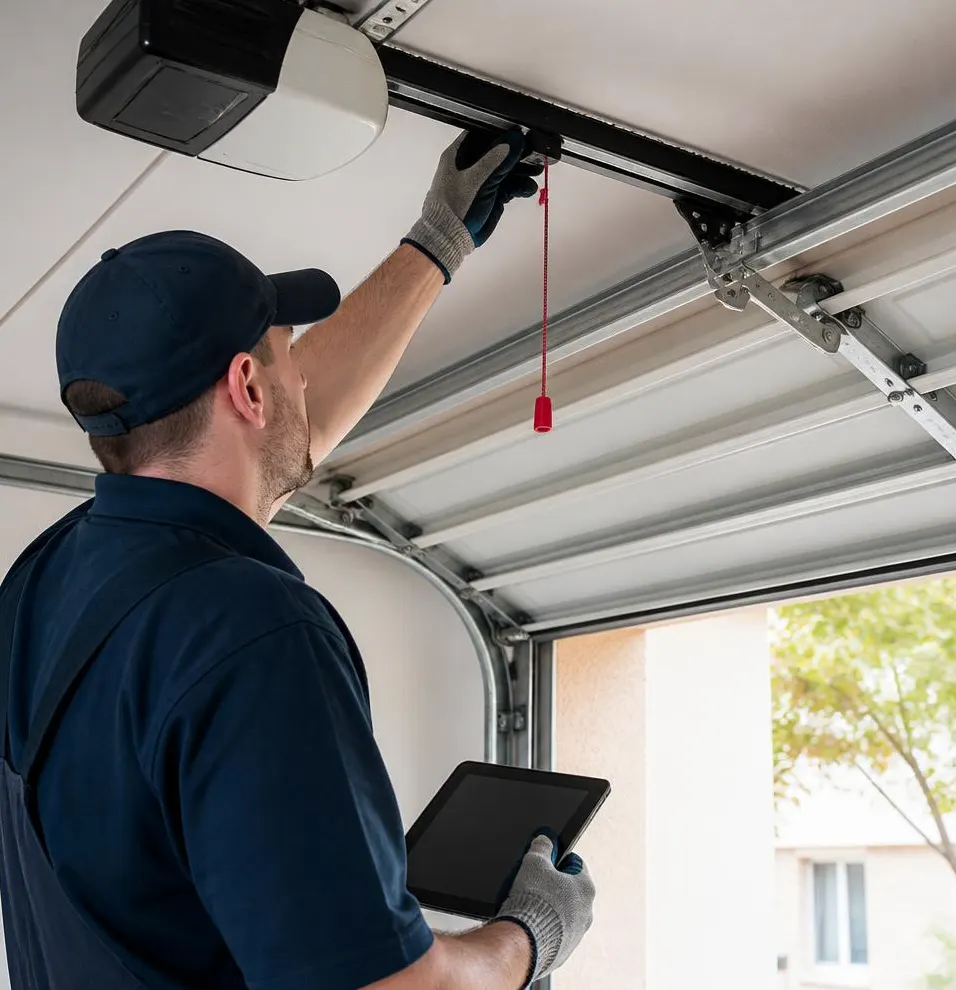
The Moment You Notice It
You hit the opener button on your way out the door, and instead of the usual smooth roll-up, you get a groan, a shudder, or a door that stalls halfway and reverses. Or maybe the door looks closed fine, but when you try to open it, the bottom edge won't separate from the concrete at all — it feels almost glued down. Either way, something changed overnight, and the timing usually lines up with a cold snap or the first real rain of the season.
El Monte doesn't get hard freezes, but winter mornings in the San Gabriel Valley can dip cold enough, especially after a rainy night, to stiffen metal parts, thicken old lubricant, and let moisture bond rubber to concrete. The door isn't actually frozen in the way it might be in a colder climate, but the effect on your garage door can look and feel a lot like it.
What You're Likely Seeing
- The door is noticeably slower than usual, especially in the first few feet of travel
- A brief resistance or "stick" right at the bottom before the door breaks free
- Grinding or squealing from the rollers that wasn't there last month
- The opener strains, clicks, or trips its safety reverse before the door fully opens
- The bottom weatherstripping looks flattened or shows a faint outline on the concrete where it sat overnight
Working Through the Causes, in Order
1. The Bottom Seal Bonded to the Slab
This is the first thing worth ruling out, and it's the most literal version of "frozen to the ground." After a night of rain followed by a cold, damp morning, the rubber weatherstripping along the bottom of the door can form a light suction or adhesive bond with the concrete, especially if the slab has any fine dust or residue from the dry season baked into it. The fix here is simple: once you notice it, gently break the seal with a flat tool before using the opener, rather than letting the opener motor fight it. Going forward, keeping the bottom seal and the slab underneath it clean of dust and oil buildup reduces how often this happens.
2. Thickened or Washed-Out Lubricant
Garage door tracks, rollers, and hinges rely on lubricant that stays fluid enough to let metal parts move freely. After a dry summer and fall, many El Monte garages have tracks coated in a mix of old grease and dust from wildfire smoke and general dryness. Cold temperatures thicken that mixture further, and if rain has already started washing some of it out, you can end up with patches that are gummy and patches that are bare metal. A technician checks the tracks and rollers next because this is common and cheap to fix: clean off the old residue and apply a fresh, garage-door-rated lubricant to the rollers, hinges, and track rather than a heavy grease, which attracts more dust.
3. Spring Tension Shifting with Temperature
Torsion and extension springs are under constant load, and cold metal is slightly less flexible than warm metal. If your springs are already older or were marginally under-tensioned, a cold morning can be enough to expose that weakness as a door that feels heavy, opens unevenly, or makes the opener work harder than it should. This is checked after lubrication because a stiff spring and a dirty track can look similar from the driver's seat but need very different fixes. Spring issues are not a DIY repair — the tension involved can cause serious injury — but a technician can test the balance by hand and replace a worn spring with one rated for your door's weight.
4. Rollers, Hinges, and Track Hardware
Worn nylon rollers, loose hinges, or a track that's slightly out of alignment all get harder to ignore once cold weather adds friction to the mix. Rain intrusion can also introduce surface rust on older steel rollers or hardware, particularly in garages that caught moisture during the first storms of the season. The fix ranges from tightening hardware and replacing a few rollers to a broader track adjustment, depending on what's actually worn versus just stiff.
5. Opener Sensitivity and Limit Settings
If the door itself moves freely by hand but the opener still struggles, the issue may be in the opener's force or limit settings, which can drift over time and become more noticeable when the door is moving slower than usual for mechanical reasons. This is usually the last thing checked, since it only matters once the physical drag on the door has been ruled out or corrected.
When to Call El Monte Garage Door Experts
If your door is sticking at the bottom seal only, that's often something you can manage yourself. But a door that's slow across its whole travel, straining the opener, or showing uneven movement is worth a proper look. Our Garage Door Maintenance visits cover exactly this kind of seasonal tune-up — cleaning and lubricating tracks, checking roller and hinge wear, and testing spring balance before a minor stiffness turns into a stuck door or a snapped spring. If the issue turns out to be tension-related, our Spring Replacement service handles that safely with the right springs for your door's weight and size.
If your garage door has been sluggish or sticking lately, call El Monte Garage Door Experts for a straightforward diagnosis and fix, serving El Monte, CA and the surrounding San Gabriel Valley.